

Register for a free webinar
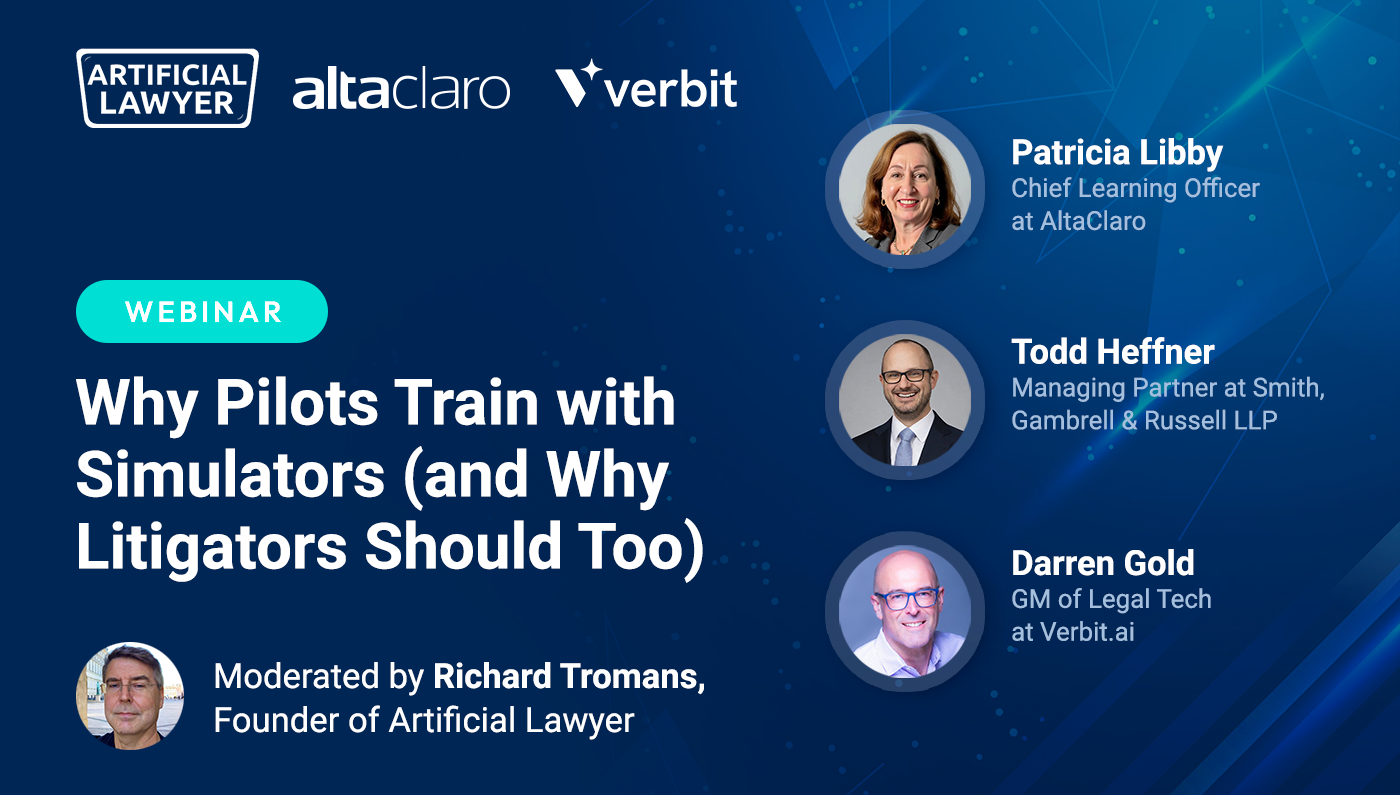
Why Pilots Train with Simulators (and Why Litigators Should Too)
Webinar
Why Pilots Train with Simulators
(and Why Litigators Should Too)
October 8, 2026 at 11 AM EST
Session time: 1 hour
Every high-stakes profession has accepted a hard truth: performance under pressure is trained, not innate, and without recurrent practice it decays. Law is the exception. Not for want of mandatory continuing education, but because almost none of it asks a lawyer to perform under pressure and to be assessed on their performance. Commercial pilots usually complete simulator training every six months, not because they've forgotten how to fly, but because the profession recognizes that skill decays without deliberate use. Surgeons rehearse procedures. Elite athletes drill the same movements thousands of times. In each of these fields, recurrent practice is treated as non-negotiable, because the cost of an atrophied instinct in a live moment is too high. Litigation has never worked this way. Deposition skill has historically been built the ad hoc way, through whatever live matters happened to come across a lawyer's desk, with no structured mechanism to develop it on purpose, maintain it between engagements, or support it when the pressure hits. That model is breaking down at exactly the moment the pressure is intensifying. The issue is not how many depositions the profession takes, but how many one lawyer takes and the duration between them. For most litigators, they are episodic, rather than continuous.
This session examines what happens when litigation adopts the recurrent-training and real-time-support model that every other high-performance profession already relies on. Simulation-based learning gives litigators something the profession has never had: a place to rehearse high-stakes moments on purpose rather than wait for a live matter to test them. It creates the deliberate practice that keeps instincts sharp between depositions, not erode in the gaps. Practice is only half of it. In the room itself, the lawyer has always worked from memory, preparation, and whatever an available colleague as second chair can catch in real time. That constraint is no longer a given. Together, they point to a performance model borrowed from disciplines that figured out long ago that talent alone doesn't hold up under pressure, and that the professionals who perform best are the ones whose systems assume it won't.
In this session, you’ll learn:
- Why deposition skill decays without recurrent practice, and why litigation has ignored that reality longer than any other high-stakes profession
- What aviation, medicine, and elite athletics can teach litigation about training and sustaining performance under pressure
- How simulation-based learning creates the deliberate practice that keeps instincts sharp between live matters
Richard Tromans
Founder of Artificial Lawyer
Patricia Libby
Chief Learning Officer at AltaClaro
Todd Heffner
Managing Partner at Smith, Gambrell & Russell, LLP
Darren Gold
GM, Legal Tech at Verbit.ai
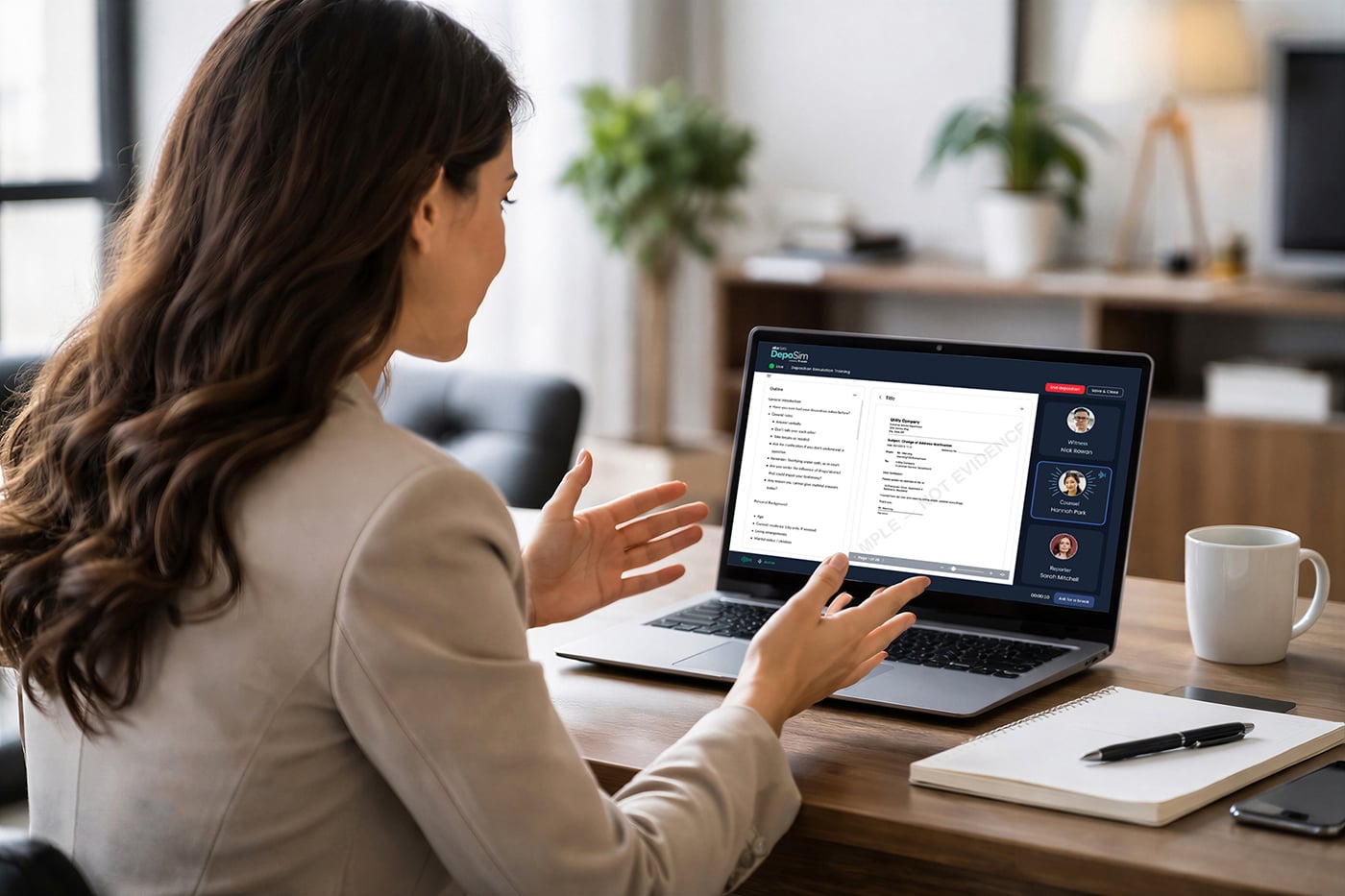

Traditional deposition training is expensive, infrequent, and rarely repeatable. DepoSim changes that.
Conduct live, realistic oral depositions on-demand—with AI acting as the witness, opposing counsel, and court reporter—then get structured, objective feedback within minutes so you can run the next rep better.
How DepoSim works
DepoSim places attorneys in a live, simulated deposition, complete with AI agents acting as the witness, opposing counsel, and court reporter. Attorneys conduct the deposition in real time, handling objections, managing exhibits, and adapting their questioning strategy on the fly. Within minutes of completing the session, they receive detailed, rubric-based feedback.